7 min read
The Hidden Risks of Frictionless Design
Vilim Vulama Posted on November 21, 2025
Quick Take
- Frictionless design feels efficient but often reduces user control.
- Super-apps and zero-click results show how removing steps can create hidden dependence.
- Products that last balance speed with trust: automate the routine, but leave visible checkpoints where it matters.
Frictionless design is everywhere. Google’s AI overview now delivers the answer before you have to click on any website. TikTok’s algorithms queue up the next video before you even think about it. Netflix instantly lines up the next episode while AI recommends what else you might enjoy.
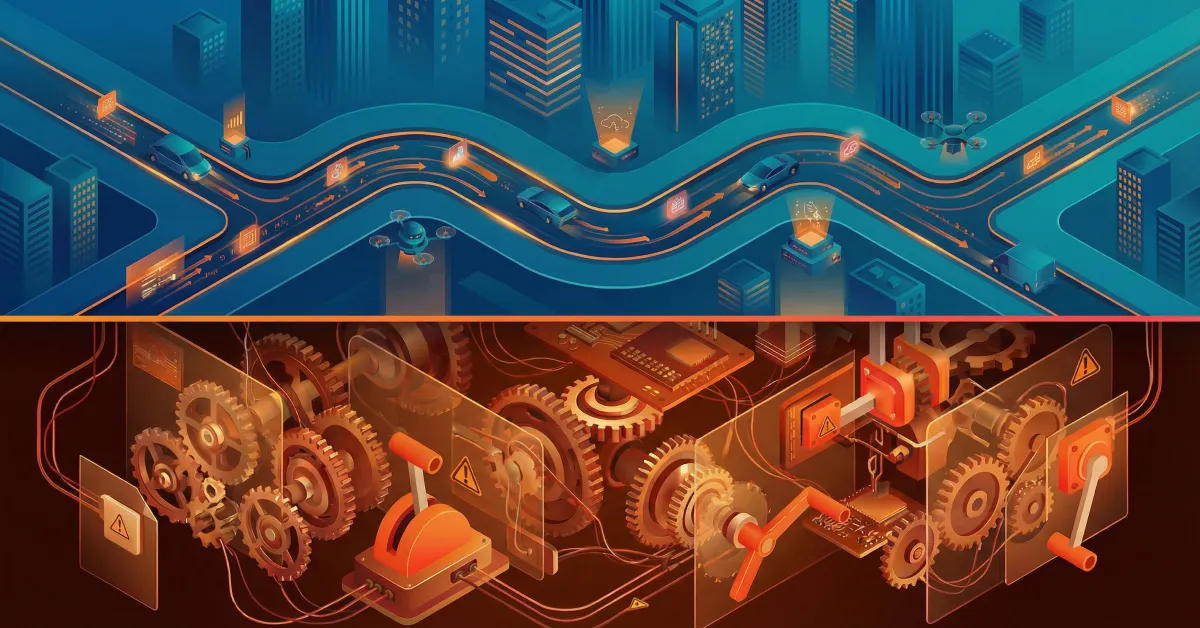
All of this is fast, simple, and can feel great. But every time a system chooses on your behalf, you lose a bit of control. And once that control is gone, it’s hard to get back.
In this article, we'll explore what frictionless design is, why it feels like progress, where it creates risk, and the steps founders can take to build products that last.
Table of contents
- What is Frictionless Design?
- Why Frictionless Feels Like Progress
- When Convenience Becomes Dependence
- When Frictionless Fails
- Why Some Friction Builds Trust
- Building Products That Last
- The Psychology of Control
- What Founders Should Focus On
What is Frictionless Design?
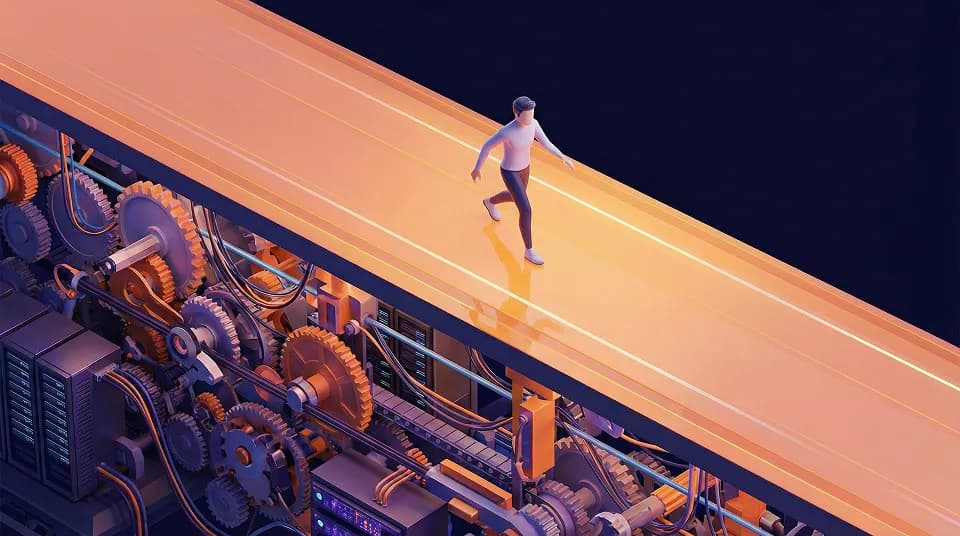
Frictionless design, also known as seamless design, involves stripping away as many steps as possible from an experience. The goal is to make things feel instant and effortless.
Autoplay on Netflix, infinite scroll on social media, or one-click checkout on Amazon. Each removes work for the user, but also reduces visible control over the outcome.
At its best, frictionless design helps people move faster. However, at its worst, it makes products fragile, untrustworthy, and overly reliant.
Why Frictionless Feels Like Progress
For companies, fewer steps mean more usage. For example, Google now answers many questions directly in its AI overviews, reducing the need to click into any website.
For users, this feature feels efficient, but psychologists call it decision fatigue: the more small choices we face, the harder it is to make good ones. Removing steps feels like progress, even when it narrows our options.
This is why we’re seeing frictionless systems spreading so quickly today. Companies want more engagement, investors want growth, and users want speed. The downsides usually appear only after habits are set.
When Convenience Becomes Dependence
This risk grows when one platform covers too many parts of daily life.
- In China, WeChat is used for messaging, payments, and services. If the app goes down, people lose access to much more than just a chat.
- In India, UPI now powers billions of transactions each month, but regulators capped how much of the market a single provider can control.
- Grab in Southeast Asia expanded from ride-hailing into banking and delivery, but had to scale back.
- Revolut in Europe is pushing into banking, payments, and trading, but regulators are already watching closely.
And of course, many teams today rely on AI tools to write reports, summarize meetings, or generate campaign ideas. But what happens if AI tools disappear, slow down, or generate false information? Momentum collapses. What feels like progress is often hidden dependence.
From super-apps that want to handle every part of life to zero-click results that answer questions without leaving the page, the pattern is the same: platforms remove steps to keep us inside their walls, but in doing so, they create fragility and dependence.
When Frictionless Fails
Attempts to remove too much friction often backfire.
Facebook tried to turn Messenger into a platform for payments and bots, but users found it confusing. Amazon’s Alexa was marketed as a universal assistant, but most people still use it for simple tasks.
These examples demonstrate that removing friction without building trust rarely works. Products might feel seamless at first, but fail to earn lasting adoption. Sometimes, less friction simply exposes weakness…
Why Some Friction Builds Trust
In one of our recent projects, we removed a lot of unnecessary steps from the user journey. Fewer fields, fewer repeated inputs, fewer moments where someone had to stop and think about something the system already knew. But we intentionally left the final confirmation. That last pause gave people a moment to check what mattered and make the call themselves. It made the whole flow feel dependable instead of rushed.
Products shouldn’t eliminate every step, but instead keep the ones that truly matter.
Booking systems are also a good example of this. Calendars can auto-confirm reservations, but teams still need the option to intervene when something looks unusual. That small pause keeps the entire process reliable.
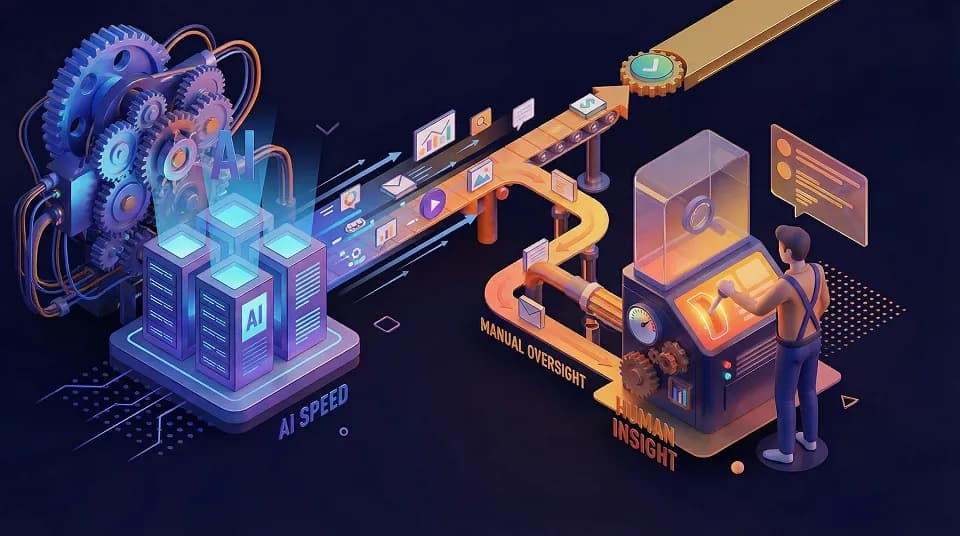
The same logic applies to AI. An AI that auto-generates and executes a task without supervision often feels like a loose cannon. Speed is useless if the output is wrong. Adding a mandatory review phase validates the user’s expertise and turns a risky automated process into a trusted, professional workflow.
Oversight builds confidence, which is why friction isn’t always a bad thing. The right amount of visible control is what makes people believe a system will hold up when it matters.
Building Products That Last
Products built to last are modular, adaptable, and designed for resilience. In practice, this means focusing on modular product design, where systems are broken into parts that can fail, recover, or be replaced without taking down the entire system.
Below are 5 practices founders can apply to balance speed and trust.
Design intentional pauses
Not every step should be automated. Add small moments where people can check or confirm what’s happening, like reviewing a document before it’s published or flagging unusual data.
Watch for hidden errors
Some failures are obvious, but others aren’t. A payment may appear complete, but never hit the account. Or AI slipping in a wrong statistic in the copy. Build systems that catch these “silent” failures before users notice.
Avoid single points of failure
Super-apps and AI models often rely on one core service. If it goes down, everything goes down with them. Always design backup paths, such as a second vendor or a manual fallback option.
Give experts more control, not less
Advanced users often want more options, not fewer. Offering logs, confirmations, or detailed settings builds trust with the people who stress-test your product.
Run failure drills
Airlines practice what happens if systems fail. Digital products should too. Simulate a short outage and see how your product and team respond. It’s one of the best ways to build resilience.
These steps may slow things down slightly, but they prevent much bigger problems later on.
The Psychology of Control
People value speed, but they also value feeling in control. Psychologists Edward Deci and Richard Ryan showed in their Self-Determination Theory that autonomy is a core driver of motivation. Take it away, and people disengage, even if the system works faster.
And AI makes this clearer than ever. A 2023 Harvard Business School study found that employees trusted AI far less when they couldn’t review or approve outputs. Efficiency wasn’t enough. Oversight mattered much more.
The same pattern shows up across various industries as well. Pilots still train for manual flying, even with the use of autopilot. Doctors want to review AI-assisted recommendations before accepting them. Finance teams keep human approvals for large transactions, even when algorithms handle routine trades.
Founders should ask themselves these three questions as they design:
- Where do users want pure speed, and where do they want visibility?
- Do people have the ability to override, undo, or challenge an automated action?
- When the system explains itself, is that explanation clear enough for a non-expert to trust?
Control is not wasted time. It is often the difference between users who stick with a product long-term and those who quietly stop trusting it.
What Founders Should Focus On
It is tempting to believe fewer steps always make a product better. But smooth design alone does not create resilience.
Founders win when they:
- Automate only where mistakes are low-impact.
- Leave visible control where accuracy and trust matter most.
- Test not only for speed, but also for how the product behaves when something breaks.
- Treat AI as an assistant, not a replacement for judgment.
The products people stick with are the ones that can handle failure gracefully, not the ones that save two seconds when everything goes right.
Convenience may help adoption, but resilience and trust are what keep people coming back.
As you look at your own product, circle two flows: one where speed is critical, and one where visible control is essential. If you can design both well, you are already ahead of most competitors.